Traditional Japanese Events: January and February
After New Year’s, the third term begins at school.
Then there’s Coming-of-Age Day.
In Japan, coming-of-age was previously at 20, but has since been lowered to 18.
On that day, many people wear kimonos and participate in the Coming-of-Age Day ceremony.
Women in particular have a lot of preparation to do, and I remember going to the hair salon at around 5 a.m. to get my hair styled and put on a kimono.
To be honest, I’m not a fan of kimonos. They’re very difficult to move in, and it’s too cold to wear them in January.
The Coming-of-Age Ceremony was a very boring gathering held at a place like a civic center, where we listened to speeches by the mayor and politicians.
I was a university student at the time, so I certainly felt like I’d become an adult, but since I don’t drink or smoke, it wasn’t particularly moving.
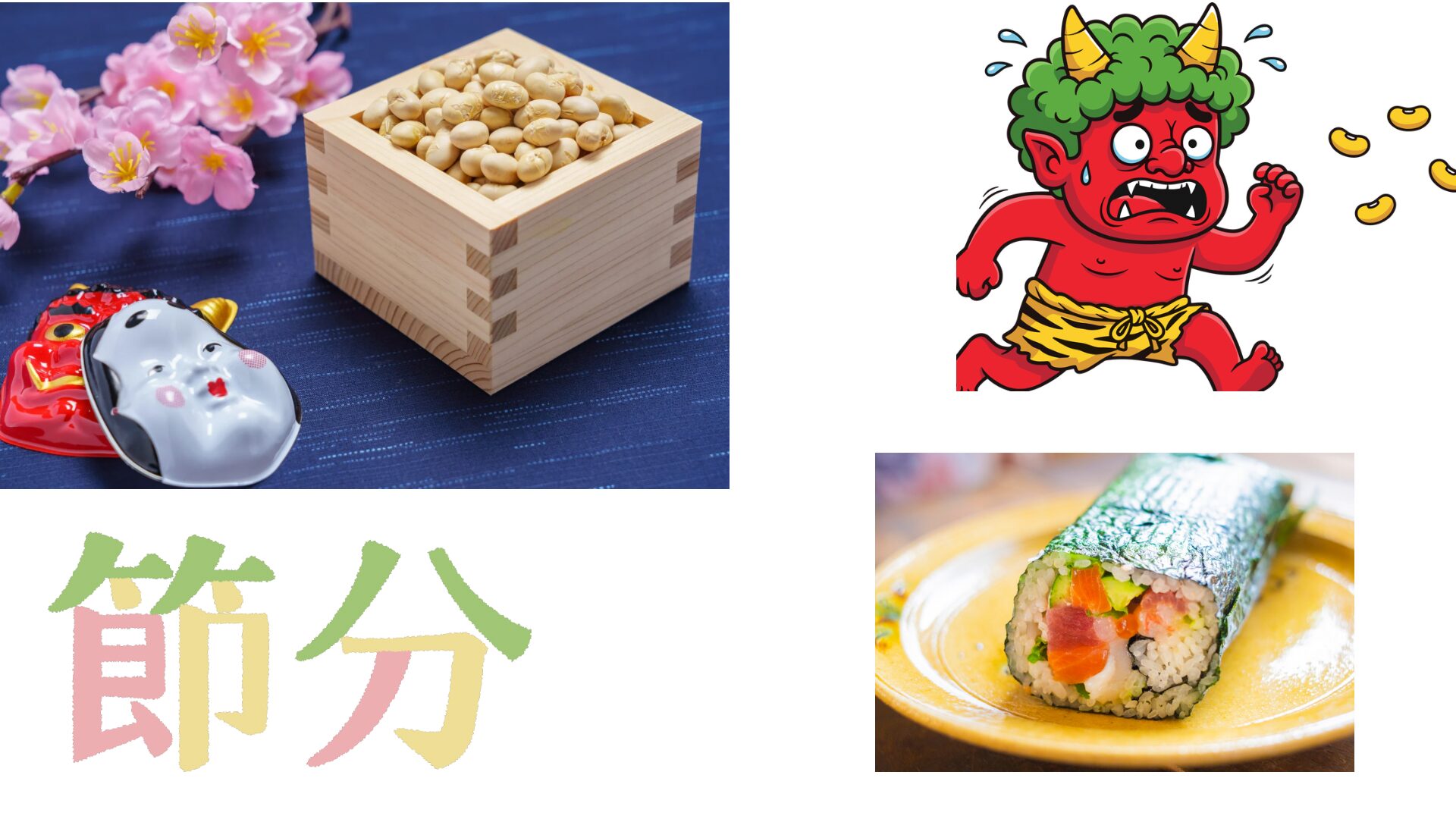
Setsubun in February marks the beginning of each season and is an event where people throw roasted soybeans and eat the same number of beans as their age while chanting “Oni wa soto, fuku wa uchi” (“Demons out, good fortune in”) to ward off evil spirits.
At the time, there is a custom of eating “uncut thick sushi rolls,” which are said to bring good luck if eaten while facing the lucky direction.
The custom of eating ehomaki seems to have spread throughout Japan in the 1990s, so I think it is a relatively new custom.
However, personally, I don’t eat this ehomaki.
I believe it is a corporate business opportunity.
At this time, supermarkets, convenience stores, and department stores sell ehomaki in huge numbers.
Every year after Setsubun, the mass disposal of ehomaki becomes a problem.