The Difficulty of Learning Japanese
Here’s a recent article I found in the news online.
The number of foreigners living in Japan is increasing rapidly every year.
The development of systems for teaching Japanese to foreign children is lagging behind.
The dramatic increase in children and students who cannot understand Japanese at all is apparently causing teachers at many schools to struggle to cope.
Because foreign students cannot understand Japanese lessons at all, there has been a dramatic increase in the number of students who skip school or suddenly drop out.
At my school, foreign students do not understand Japanese, and their parents do not either, so the homeroom teacher is at a loss as to how to communicate with them.
One of the staff members who assists with English classes at my school has been living in Japan for over three years, but he was very depressed after failing his Japanese language exam.
Even as a Japanese person, I sometimes find Japanese difficult.
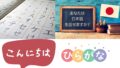
The Japanese language is composed of three types of characters: hiragana, katakana, and kanji, and I think memorizing them is extremely difficult.
Also, unlike English, you need to use different words depending on who you’re speaking to.
The Japanese language is so deep that there are countless ways to speak it, such as with people you meet for the first time, older people, younger people, or people in a higher position.
Strangely enough, I speak very quickly when speaking English, but in Japanese I have to choose my words carefully so I speak more slowly.
Also, Japanese tends to avoid stating the essence or the truth directly, so it is very delicate, the complete opposite of clear English.
This theme will be continued next time.