Japan is often praised for its order, safety, politeness, and stability.
I understand why.
From the outside, these qualities look admirable.
And even from the inside, many of them are real.
Japan can be efficient.
It can be elegant.
It can be calm.
It can be beautifully controlled.
But there is another side to this same system, and I think it deserves far more attention.
For independent thinkers, Japan can feel suffocating.
I do not mean dramatic oppression.
I mean something quieter, more subtle, and often harder to explain.
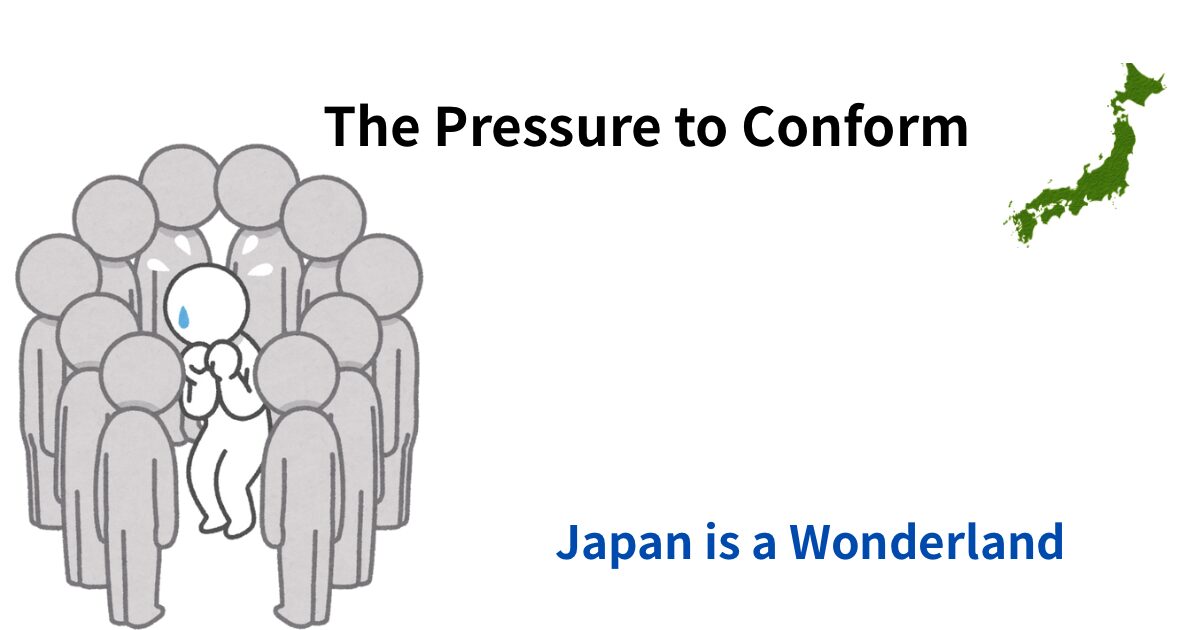
It is the constant pressure to fit smoothly into expectations that are rarely stated directly.
In Japan, many people are trained from an early age to read the atmosphere, adjust themselves, and avoid disrupting group harmony.
That may sound harmless.
It may even sound admirable.
But over time, the emotional cost can become very high.
You begin to feel that your role is not simply to live honestly, but to manage how your thoughts, words, and behavior affect the comfort of the group around you.
That is exhausting.
You are expected to notice what is implied rather than what is said.
You are expected to soften disagreement.
You are expected to avoid being too direct, too different, too intense, or too inconvenient.
And when you fail to do this, people may not confront you openly, but you will often feel the resistance.
That is one of the most difficult things about Japan.
The pressure is often invisible.
Because it is invisible, many people deny it exists.
Because it is normalized, many people mistake it for maturity.
I do not.
I think a society becomes unhealthy when harmony is valued so highly that individuality begins to feel like a threat.
And that is often how Japan feels to me.
If you are someone who naturally questions systems, speaks directly, thinks independently, or wants to live with a stronger sense of personal autonomy, the emotional cost of daily life in Japan can become very heavy.
You may still function well.
You may even look well-adjusted from the outside.
But inside, you may feel compressed.
You may feel that you are constantly shrinking parts of yourself in order to remain socially acceptable.
That is why Japan feels so difficult for independent thinkers.
It is not because the country is loud, chaotic, or openly aggressive.
It is because the pressure is soft, constant, and everywhere.
And sometimes, that is the hardest kind of pressure to escape.
Japan can be beautiful.
Japan can be impressive.
Japan can be peaceful.
But peace that depends too heavily on self-suppression comes at a cost.
That cost is not always visible.
But for those who feel it every day, it is very real.