Queues, Trends, and the Fear of Standing Alone
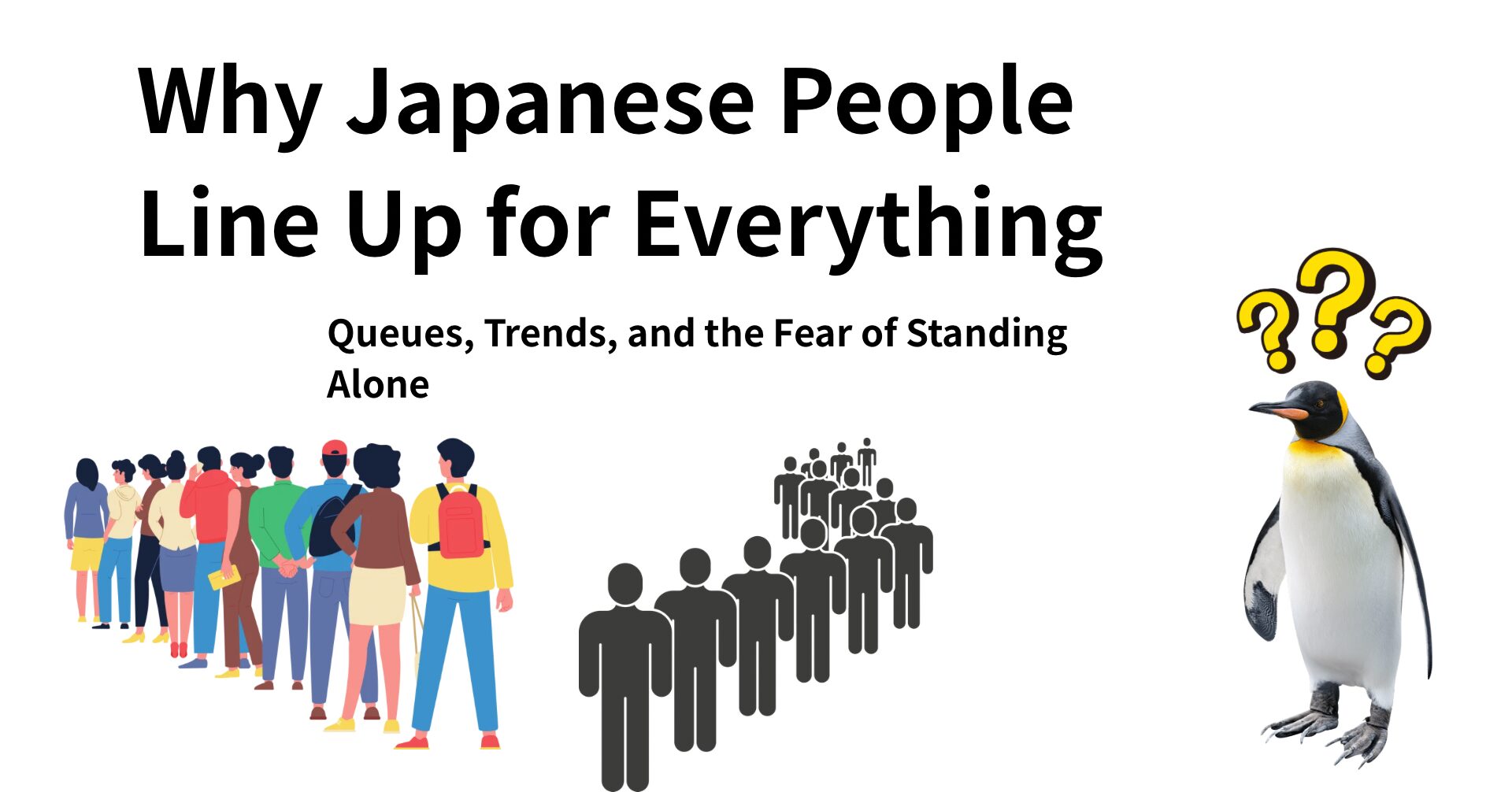
In Japan, a long line often means more than popularity.
People line up for restaurants, sweets, lucky bags, limited-edition goods, theme parks, and even things they may not have cared about five minutes earlier. If a product appears on TV or goes viral online, a line can suddenly appear as if someone pressed a hidden button.
From the outside, this may look organized, polite, and patient.
But there is another side to it.
In Japan, a line can become a form of social proof. If many people are waiting, the product must be good. If everyone wants it, maybe I should want it too. If other people are standing there, joining the line feels safe.
This is not just about chocolate, food, or shopping.
It is about the fear of choosing alone.
Many Japanese people grow up in a society where standing out can be uncomfortable. Schools, workplaces, neighborhoods, and even families often reward people for blending in. You are expected to read the air, avoid conflict, and not disturb the group.
So when people see a line, it gives them a strange kind of relief.
They do not have to decide completely by themselves.
The crowd has already decided for them.
A queue says, “This is acceptable.”
A queue says, “You are not strange for wanting this.”
A queue says, “Everyone else is doing it.”
That is why trends spread so quickly in Japan. A small trigger can become a national movement. A TV show introduces a dessert. Suddenly, everyone wants it. A store announces a limited edition. Suddenly, people feel they must go before it disappears. A lucky bag appears once a year. Suddenly, people line up before opening time.
The product itself is not always the main point.
The feeling of joining the movement is part of the product.
This is why Japan’s queue culture is so interesting. It looks harmless, and sometimes it is. Waiting in line can be orderly and fair. But when lines become symbols of belonging, they reveal something deeper about Japanese society.
Many people are not only buying a product.
They are buying reassurance.
They are buying the feeling that they are not behind.
They are buying the feeling that they are not alone.
They are buying the feeling that they are still inside the group.
This is also why people who do not join the trend can sometimes look strange in Japan. Not buying the popular thing, not watching the popular show, not visiting the popular place, or not following the popular behavior can quietly mark someone as different.
Nobody may say it directly.
But Japan often speaks through silence.
That silence can be more powerful than words.
Of course, not every Japanese person follows trends blindly. Many people make their own choices. Many people dislike crowds and avoid lines completely. But as a social pattern, Japan’s relationship with queues shows how powerful group behavior can be.
A line is not just a line.
It can be a mirror.
It shows how people search for safety in numbers.
It shows how trends replace personal judgment.
It shows how difficult it can be to stand alone in a society that values harmony.
Japan often looks calm from the outside.
But behind that calmness, many invisible pressures are moving people in the same direction.
Sometimes, all it takes is one line.
I also wrote a deeper digital essay about Japan’s queue culture, chocolate trends, and social pressure.
Read it here:
Chocolate, Lines, and Social Pressure