Japan Said It Had a Rice Shortage. So Why Did I See Japanese Rice Overseas?
Japan often talks about rice as something sacred.
Rice is not just food here.
It is culture, tradition, identity, and comfort.
So when Japan started talking about a rice shortage, I paid attention.
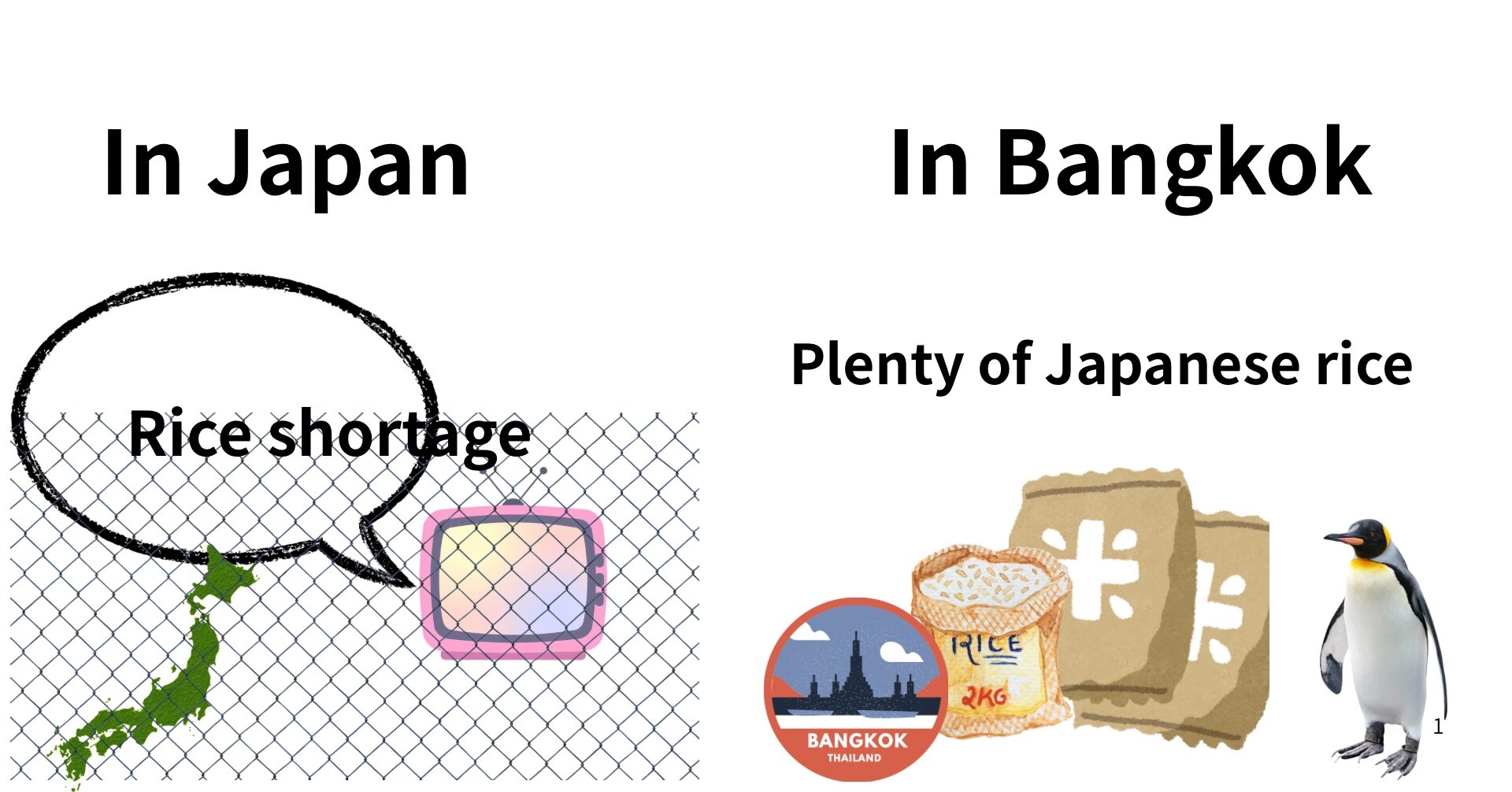
People were told that rice was hard to find.
Prices were rising.
Some stores limited how much customers could buy.
The atmosphere became tense, as if ordinary people simply had to accept the situation.
But then I saw something strange.
When I traveled in Southeast Asia, I saw Japanese rice.
Not just one bag.
Not something hidden in a corner.
Japanese rice was being sold overseas.
At that moment, I felt a familiar discomfort.
If Japan was facing a rice shortage, why was Japanese rice visible outside Japan?
Of course, the answer may involve contracts, exports, distribution systems, timing, brands, and market rules. I am not saying that one supermarket shelf overseas explains the entire situation.
But that is exactly what makes the issue uncomfortable.
Ordinary people are told to accept higher prices.
Ordinary people are told to be patient.
Ordinary people are told not to panic.
Meanwhile, the system behind the shortage remains difficult to see.
Who controls the flow of rice?
Who benefits from high prices?
Why do ordinary consumers have to carry the anxiety first?
This is not only about rice.
It is about a pattern I keep seeing in Japan.
When something goes wrong, ordinary people are often asked to endure it quietly.
When prices rise, people adjust.
When rules become inconvenient, people obey.
When systems become unclear, people are expected to trust them anyway.
Japan is often described as beautiful, polite, safe, and orderly.
But inside that beautiful image, there are many hidden contradictions.
A country can praise rice as tradition while making its own people anxious about rice.
A country can talk about harmony while ordinary people struggle silently.
A country can look organized from the outside while its systems remain confusing from the inside.
That is the Japan I keep seeing.
The rice issue made me think again about the difference between Japan’s image and Japan’s reality.
From the outside, Japan may look beautiful.
But from the inside, beauty is not enough.
People need transparency.
People need real choices.
People need systems that do not quietly shift the burden onto ordinary citizens.
Rice is one of the most basic foods in Japan.
If people begin to feel powerless even in front of rice, that is not a small problem.
It is a sign that something deeper is wrong.
This short article is only an introduction.
The full version explores Japan’s rice crisis, hidden systems, and the quiet burden placed on ordinary people.
This short article is an introduction to a longer essay about Japan’s rice crisis, hidden systems, and the quiet burden placed on ordinary people.
The full version will be available on Yume Trap.