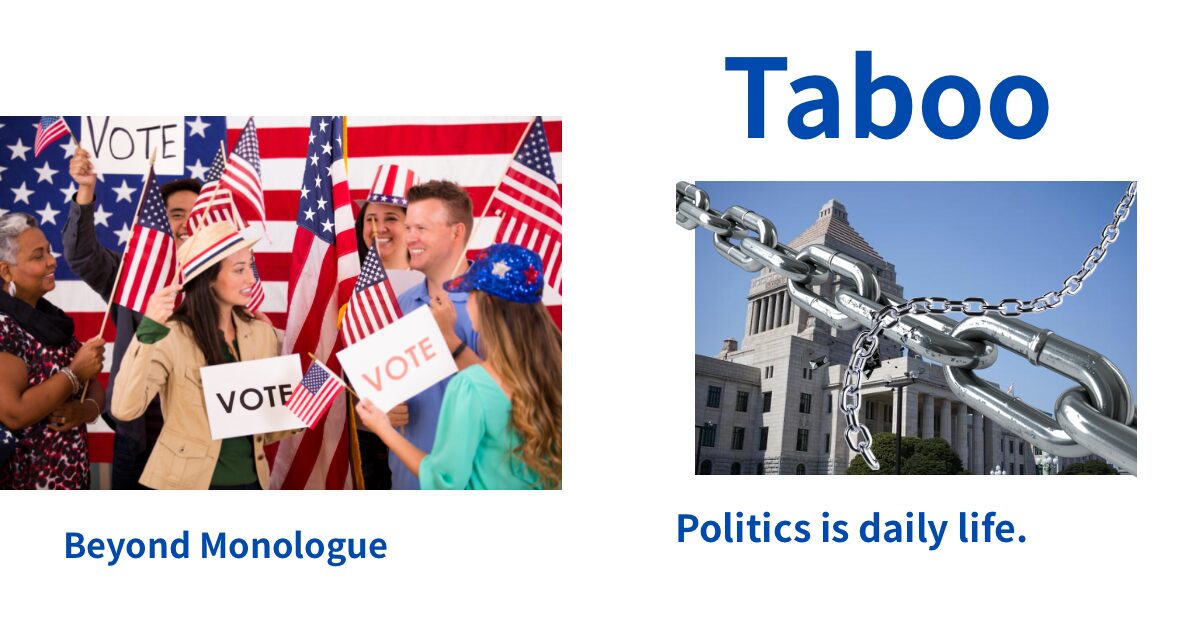
In many countries, people talk about politics in cafés, restaurants, and everyday conversations.
They talk about taxes.
They talk about pensions.
They talk about government policies.
They talk about whether their leaders are doing their jobs.
To me, this is normal.
Politics is not a distant topic.
It affects salaries, prices, healthcare, education, retirement, and the cost of living.
If people pay taxes, they have every right to question how those taxes are used.
But in Japan, talking about politics can feel strangely uncomfortable.
People may look at you as if you are too serious, too negative, or too difficult.
Sometimes, if you criticize Japanese society, people simply say, “If you don’t like Japan, leave.”
But that is not an argument.
It is a way to avoid thinking.
Questioning a society does not mean hating it.
Criticizing bad policies does not mean rejecting a country.
In fact, silence is much more dangerous.
When people stop questioning power, power becomes comfortable.
When citizens stop talking about taxes, governments can raise them more easily.
When people treat politics as a taboo, they give up one of the most basic rights of citizenship.
A society where people cannot talk openly about politics may look peaceful on the surface.
But underneath that silence, many people may be struggling.
And the people in power may be very happy that no one wants to disturb the air.