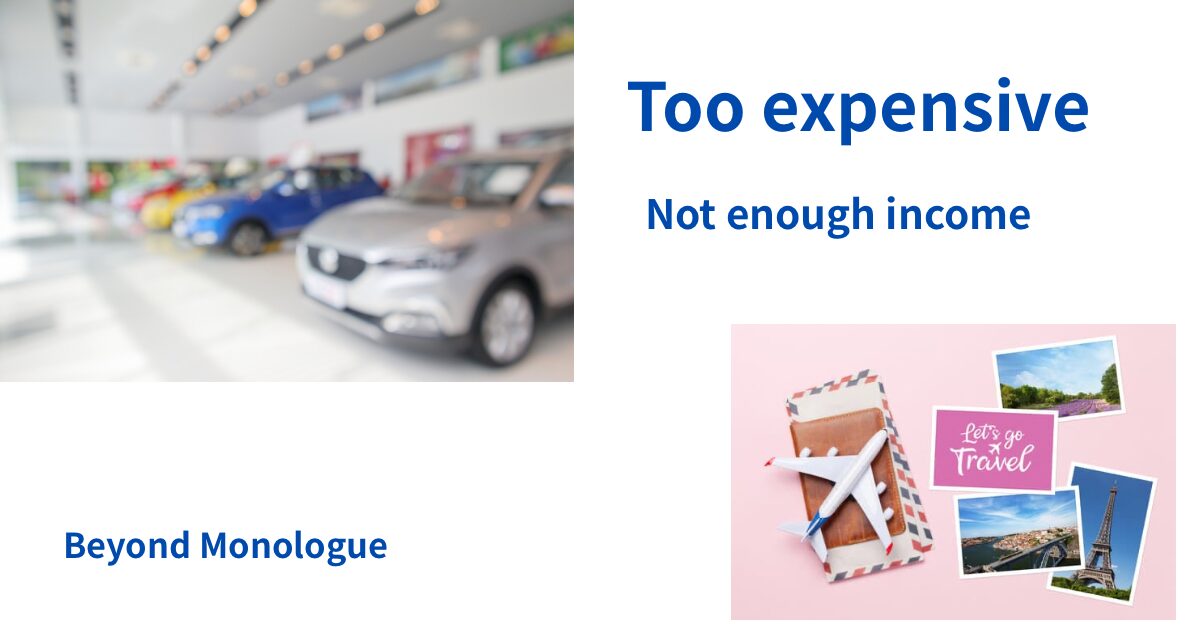
Japanese media often uses soft phrases such as “young people are moving away from cars” or “Japanese people are reluctant to invest.”
At first, these phrases may sound neutral.
But to me, they hide the real issue.
Many young people are not moving away from cars.
They simply cannot afford them.
Many people are not avoiding investment because they are ignorant.
They are struggling to survive.
When the media describes economic hardship as a lifestyle trend, it turns a structural problem into a personal preference.
In Japan, people often say that young people are no longer interested in cars. But is that really true?
Owning a car is expensive. The cost is not only the car itself. There are parking fees, insurance, fuel, maintenance, taxes, and vehicle inspection. For someone with unstable employment or a low income, a car is not simply a lifestyle choice. It can become a heavy financial burden.
So when the media says “young people are moving away from cars,” I feel something important is missing.
Maybe they are not moving away from cars.
Maybe cars have moved too far away from them.
The same thing happens with investment.
People often ask, “Why don’t Japanese people invest more?”
But before asking that question, we should ask another one.
Do they actually have extra money to invest?
Investment should be done with money people can afford to leave untouched for the long term. It should not be done with money needed for rent, food, bills, transportation, or daily survival.
It is easy to say, “People need better financial literacy.”
But financial literacy alone does not create disposable income.
Knowledge is important.
But knowledge cannot replace salary.
Knowledge cannot pay rent.
Knowledge cannot fill a refrigerator.
Knowledge cannot erase the fear of losing next month’s living expenses.
This is why I feel uncomfortable when investment is discussed as if it were simply a matter of mindset.
For people who already have savings, investment may be a tool for freedom.
But for people who are barely surviving, investment may feel like a luxury.
Words matter.
When the media uses soft words to describe hard realities, people may stop seeing the real problem.
“Young people are moving away from cars.”
“Japanese people are reluctant to invest.”
“People need to change their money mindset.”
These phrases sound clean.
But they can also hide poverty, unstable employment, low wages, and rising living costs.
They make poverty look like preference.
They make insecurity look like personality.
They make survival look like a lifestyle choice.
That is why I question these phrases.
When people cannot buy cars, maybe the issue is not culture.
Maybe the issue is income.
When people cannot invest, maybe the issue is not laziness.
Maybe the issue is a lack of financial room.
Many people are not walking away from opportunity.
They are being priced out of it.