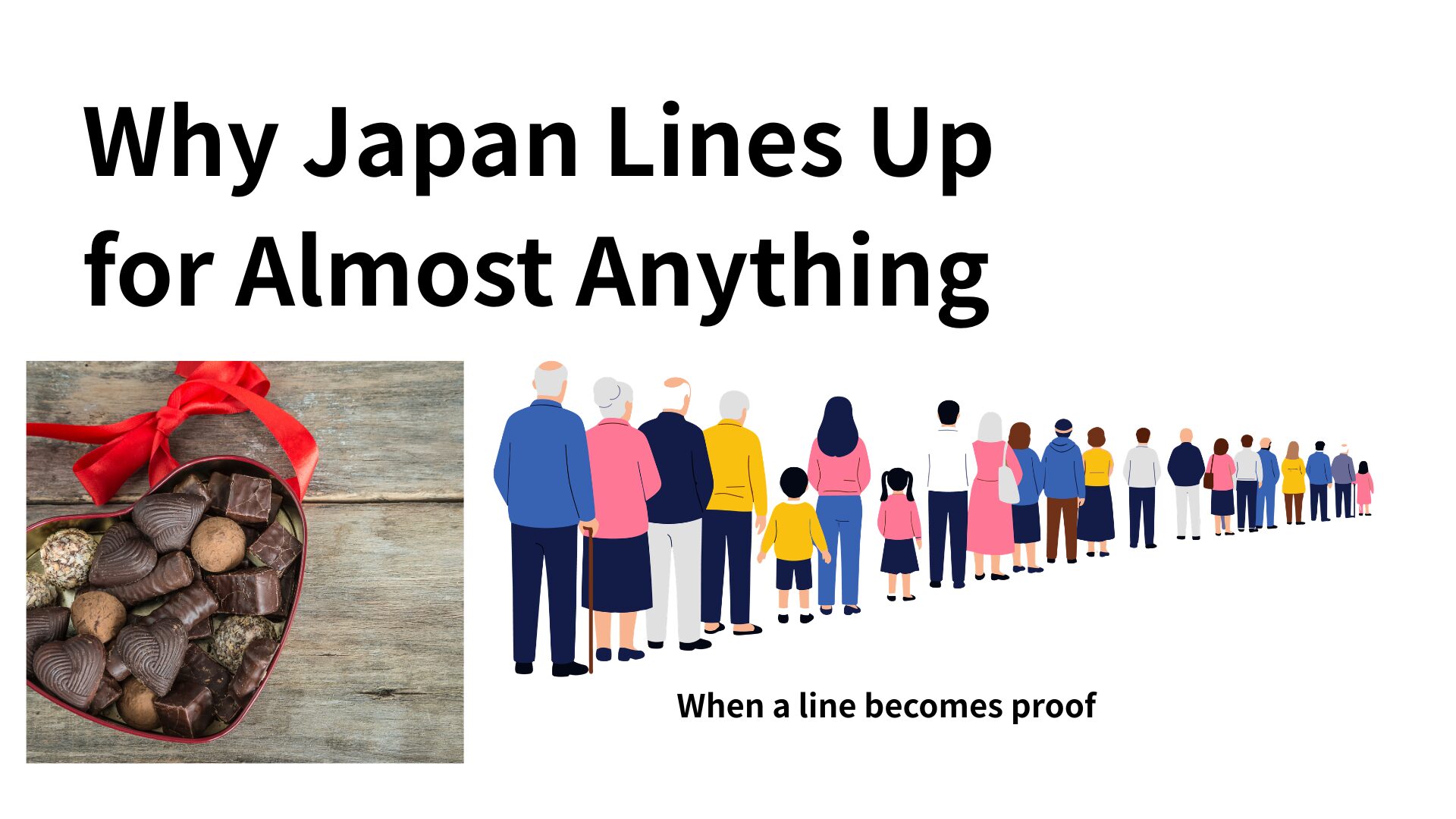
I once saw a huge line of people waiting to buy expensive chocolate in Japan.
It was not just young people.
It was not just tourists.
It was men and women, young and old, standing in line as if this was something deeply important.
And I remember thinking:
Is this really where people’s energy is going?
In the same country where wages are low, taxes are heavy, social insurance keeps rising, and people are told to prepare for retirement by themselves, thousands of people can still line up for luxury sweets.
That scene stayed with me.
Because it did not look like simple shopping.
It looked like a society trained to chase signals.
Limited edition.
Seasonal event.
Famous brand.
Ranking.
Everyone else wants it.
So people line up.
They do not always ask whether it is worth it.
They ask whether they might miss out.
This is why consumer culture in Japan is so easy to control.
Not because people lack intelligence,
but because the culture trains them to follow visible signals.
A line becomes proof.
A ranking becomes authority.
A brand becomes permission.
A small reward becomes a reason to spend.
And when a society learns to follow lines,
it may also learn to follow systems.