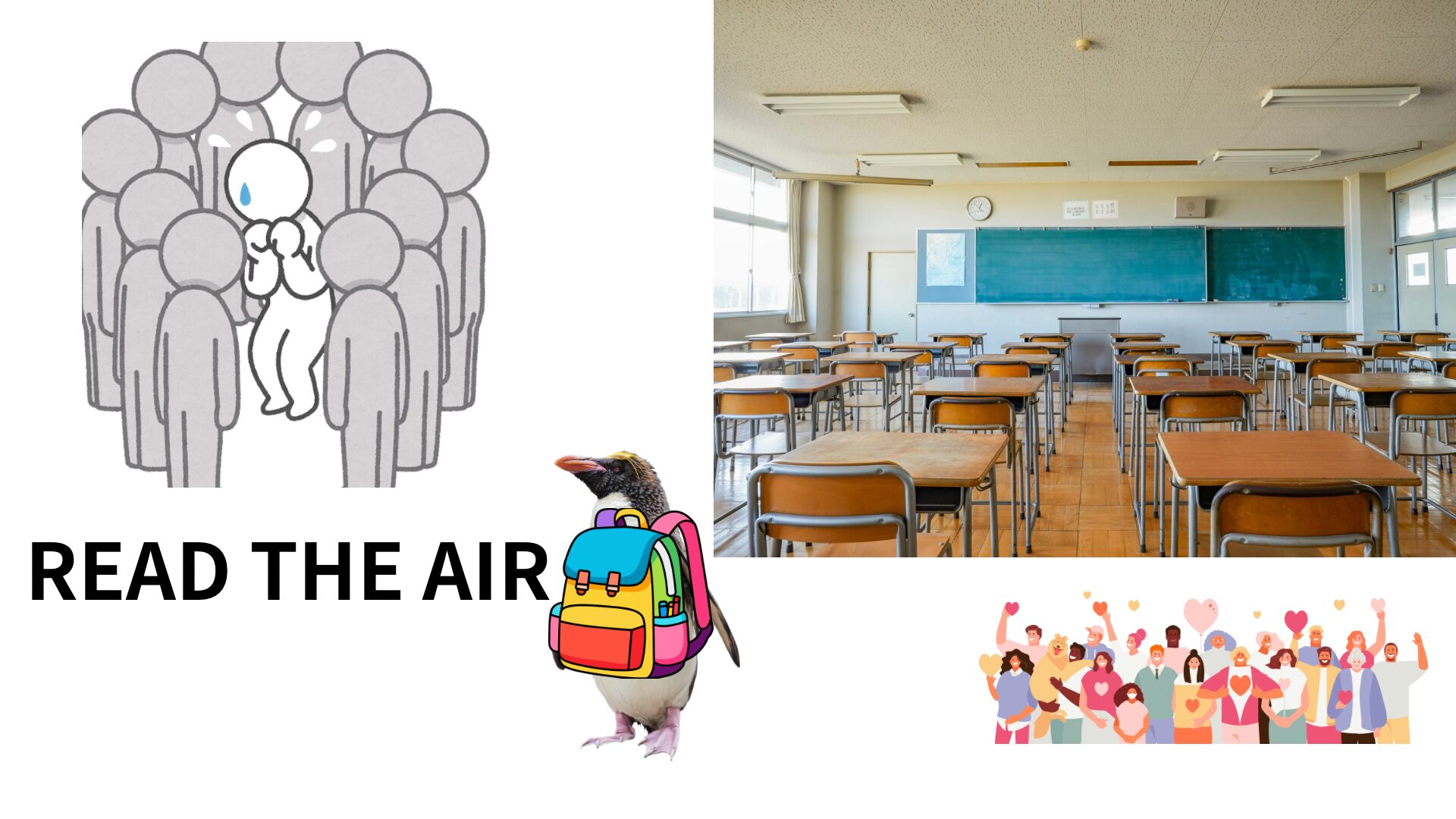
Japanese schools are often praised for their discipline, politeness, and clean classrooms.
From the outside, everything looks organized.
Students bow.
Students line up.
Students clean their classrooms.
Students follow the rules.
But inside the system, there is another lesson that is not written in textbooks.
It is this:
Read the air.
In Japanese, this is called kuuki wo yomu.
It means understanding the atmosphere without being told directly. It means guessing what others expect. It means adjusting yourself before you disturb the group.
At first, this may sound like social intelligence.
But in many Japanese schools, it becomes pressure.
Children are not only taught to study.
They are taught to fit in.
They learn not to stand out.
They learn not to disturb the group.
They learn to hide their discomfort.
They learn to look “normal.”
A quiet classroom may look peaceful.
But silence does not always mean peace.
For children who think differently, feel differently, or cannot easily understand invisible social rules, this can be exhausting.
The child is often treated as the problem.
But maybe the problem is not the child.
Maybe the problem is a school culture that expects every child to survive inside invisible rules.
This pressure does not only affect students.
Teachers also have to read the air.
Parents read the air.
Schools read the air.
And eventually, nobody says what really needs to be said.
This is one of the hidden sides of Japanese education.
Japanese schools may look orderly from the outside.
But order is not always freedom.
And silence is not always peace.