Foreigners have asked me this question many times.
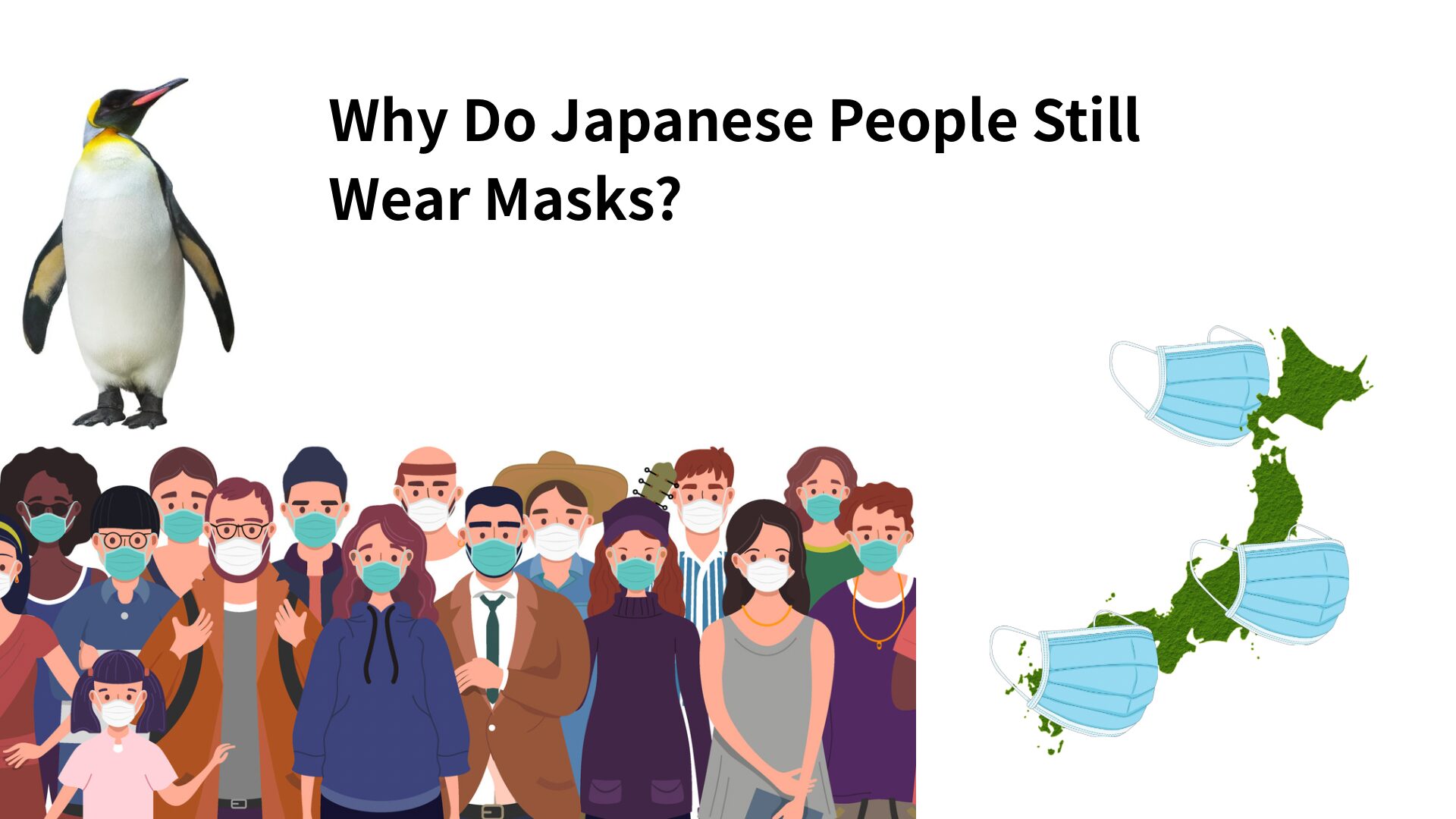
“Why do so many Japanese people still wear masks?”
It sounds like a simple question.
But the answer is not simple.
Of course, masks in Japan are partly about health.
Some people wear them because they have a cold.
Some wear them because of pollen allergies.
Some wear them because they want to protect themselves or others.
But in Japan, masks are not only about health.
Sometimes, a mask is also about social pressure.
Sometimes, it is about emotional safety.
Sometimes, it is about the fear of standing out.
And sometimes, it is about the Japanese habit of “reading the air.”
In Japan, people often look around before making a decision.
What is everyone else doing?
Am I the only one not doing it?
Will people think I am selfish?
Will I stand out?
This way of thinking appears in many parts of Japanese society.
It appears in schools.
It appears in workplaces.
It appears on trains.
It appears in small daily choices.
Wearing a mask can be one of those choices.
For some people, wearing a mask is simply practical.
For others, it is a way to avoid attention.
For some students, it can even feel like a small wall between themselves and the world.
As a teacher in Japan, I have seen students who seem more comfortable when their faces are partly hidden.
It does not mean they are lazy.
It does not mean they are strange.
It may mean that showing their face, being watched, or being judged feels heavy.
This is why Japan’s mask culture cannot be explained only by hygiene.
A mask can protect the body.
But sometimes, it also protects the mind.
At the same time, there is another side.
When many people around you wear masks, it can become difficult to remove yours, even when you personally want to.
You may think:
“Everyone else is still wearing one.”
“Maybe I should wear one too.”
“I don’t want to be the only person without it.”
This is not only about masks.
It is about a society where people often feel safer when they do what others are doing.
Japan is often described as polite, clean, and orderly.
Those things are true in many ways.
But behind that order, there is also pressure.
The pressure not to stand out.
The pressure not to disturb the group.
The pressure to read the air before acting.
So when people ask me why so many Japanese people still wear masks, I do not give only one answer.
Yes, health matters.
Yes, allergies matter.
Yes, personal comfort matters.
But social pressure also matters.
In Japan, a mask is sometimes more than a mask.
It can be a health tool.
It can be emotional protection.
It can be a social signal.
It can be a quiet way of saying, “I am following the atmosphere.”
To understand Japan, we need to look not only at what people do, but also at the invisible pressure behind their actions.
The mask is on the face.
But the real story is often in the air.