During Japan’s rice shortage panic, I was not in Japan.
I was in Southeast Asia.
And what I saw there made me question the whole story.
In Japan, people were being told that rice was hard to find. Supermarkets had empty shelves. Some stores limited how much rice customers could buy. The media reported a rice shortage, rising prices, and public anxiety.
But outside Japan, I saw something very different.
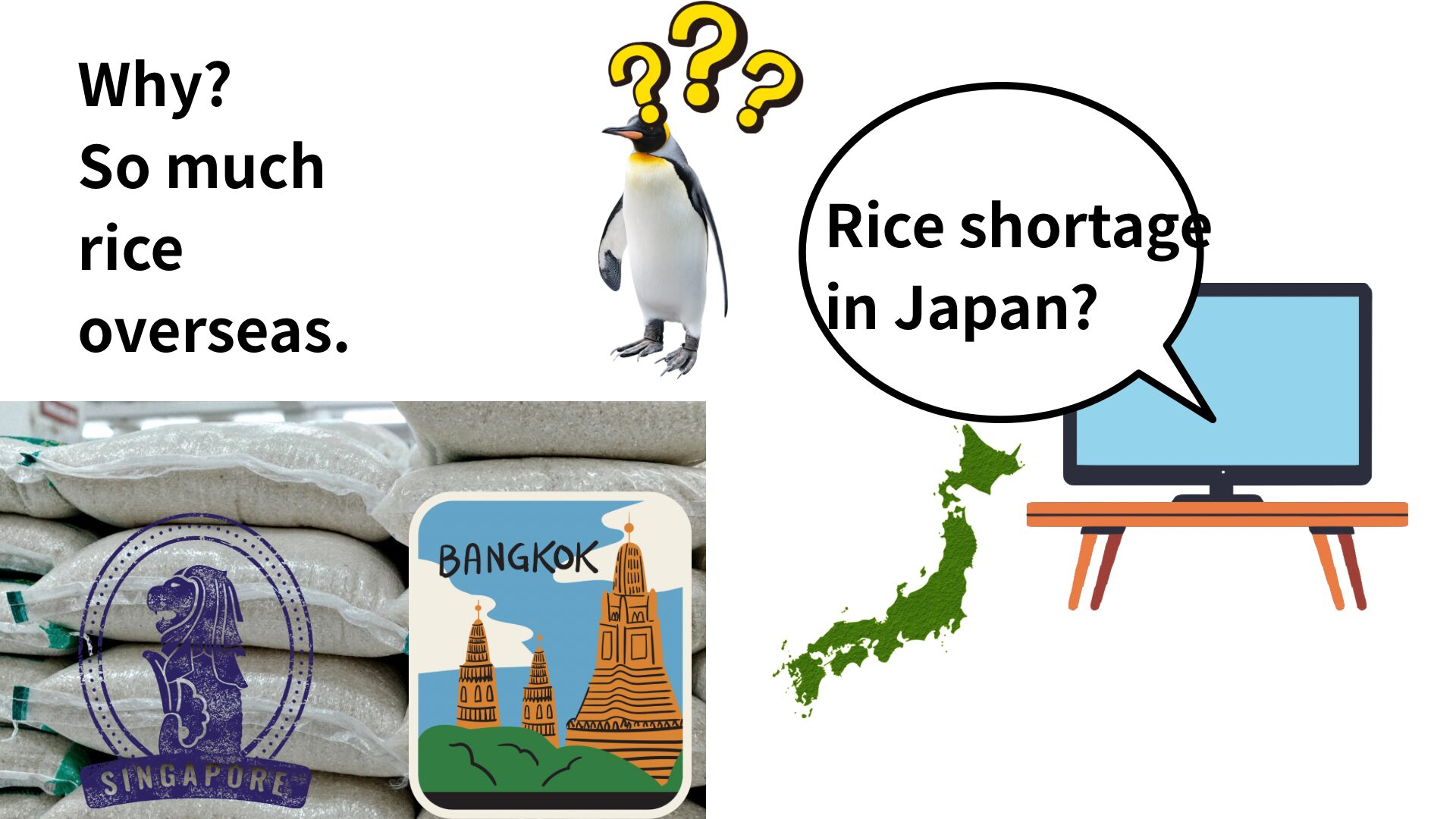
In shops in Southeast Asia, Japanese rice was sitting on shelves. Not hidden. Not rare. Not treated like gold. It was simply there, available, and in some cases surprisingly affordable.
That moment made me ask a very simple question:
If Japanese rice was so scarce, why was I seeing so much of it overseas?
This is not just a story about rice.
It is a story about information.
It is a story about distribution.
It is a story about how fear spreads inside Japan.
Japan often creates a strange atmosphere when something becomes scarce. People panic. The media repeats the same message. Consumers rush to buy. Stores create limits. The public becomes anxious. And then the system says, “There is a shortage.”
But sometimes, what looks like a shortage may also be a failure of distribution, policy, communication, and trust.
I am not saying that Japan had no rice problem at all.
There were real issues: low inventories, weather damage, higher demand, panic buying, and rising prices.
But the story many people heard inside Japan was too simple.
“Rice is disappearing.”
That was the message.
But from outside Japan, the picture looked different.
Japanese rice had not disappeared from the world.
It was still being sold overseas.
I saw it with my own eyes.
And that is why I believe Japan’s rice shortage was not only about rice. It was also about how Japan manages fear.
In Japan, scarcity often becomes social pressure.
People do not just buy what they need.
They buy because others are buying.
They buy because the news makes them anxious.
They buy because they do not trust the system.
Then the shelves become empty, and the empty shelves become proof of the panic.
This is how fear feeds itself.
The rice shortage showed something deeper about Japan:
A country that produces anxiety very efficiently.
Japan is famous for order, safety, and reliability. But when the system becomes unstable, people quickly realize how fragile that image can be.
Rice is not just food in Japan.
It is culture.
It is tradition.
It is identity.
It is comfort.
It is the symbol of ordinary life.
So when rice becomes difficult to buy, people do not only worry about dinner.
They feel that something basic in society is breaking.
But while people in Japan were being told to worry, I was walking through stores in Southeast Asia and seeing Japanese rice on the shelves.
That contradiction stayed in my mind.
Maybe the real question is not:
“Did Japan have a rice shortage?”
The better question is:
“Why did Japan create such a strong feeling of shortage while Japanese rice was still visible overseas?”
That question tells us much more about Japan than the rice itself.
It tells us about media narratives.
It tells us about consumer panic.
It tells us about government policy.
It tells us about distribution systems.
It tells us about how quickly Japanese society can turn uncertainty into fear.
In Japan, even rice can become a mirror of the system.