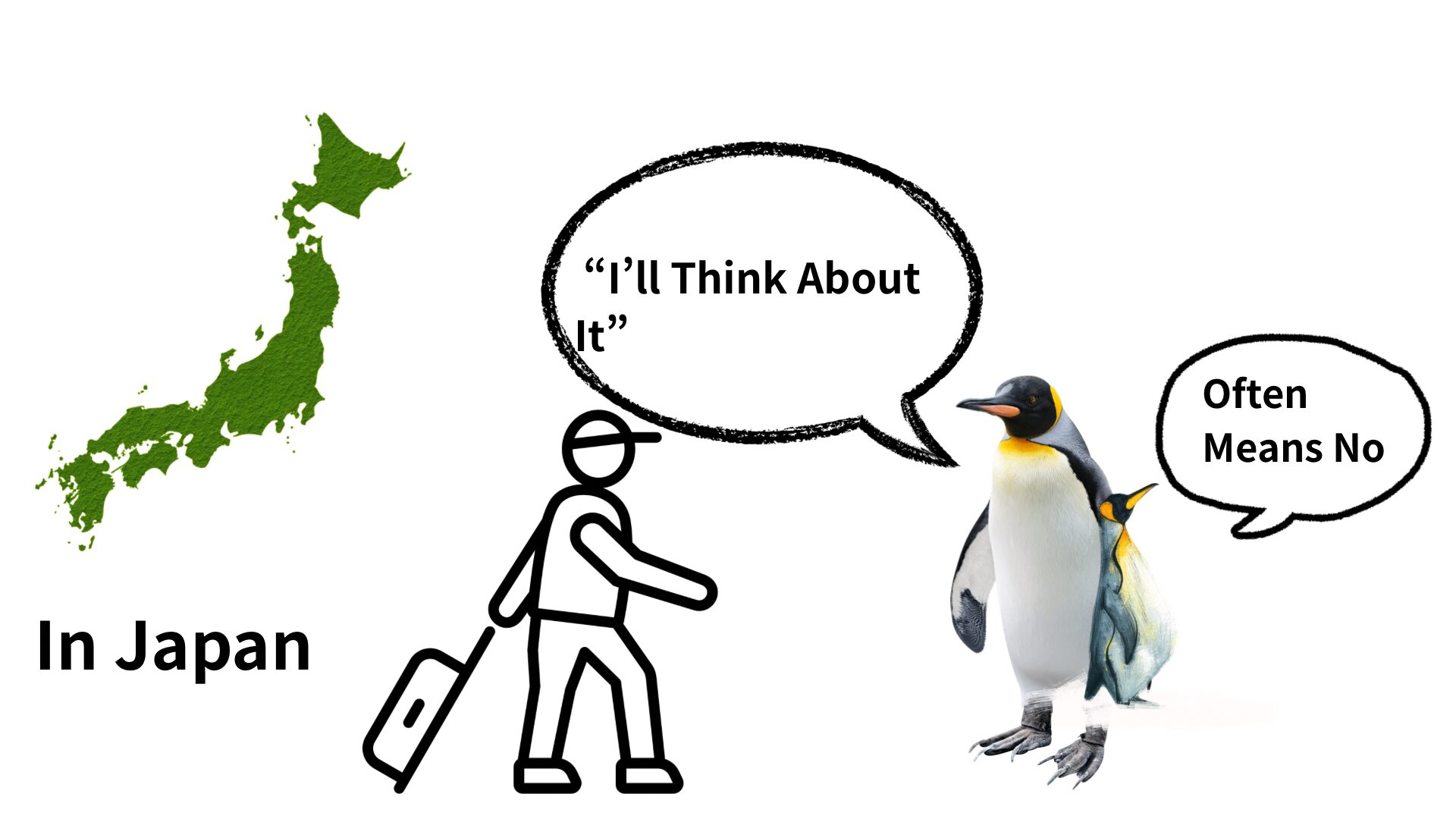
In Japan, “I’ll think about it” often means “no.”
When you hear “I’ll think about it,”
you probably expect a real answer later.
But in Japan, it often means something very different.
It Sounds Positive… But It Isn’t
“I’ll think about it.”
“Let me consider it.”
“Maybe.”
These phrases sound polite and open.
But in many cases, they actually mean:
“No.”
Why People Don’t Say “No”
In Japan, saying “no” directly can feel too harsh.
People try to avoid conflict.
They try to keep harmony.
So instead of rejecting something clearly,
they soften the message.
The Problem for Foreigners
If you take these words literally,
you will misunderstand the situation.
You might wait for a reply.
You might expect a future discussion.
But nothing happens.
Because the answer was already “no.”
How to Read the Real Meaning
Don’t focus only on words.
Watch actions.
If there is no follow-up,
no message,
no progress…
It’s a “no.”
Why This Matters
This is not about language.
This is about culture.
You can understand every word,
and still misunderstand everything.
Final Thought
In Japan,
what is not said
is often more important than what is said.
Want to understand real Japan beyond textbooks?
Most people misunderstand Japan.
This explains why.
👉 This is what language schools don’t teach.
👉 Get instant access to the full guide here →