Sho & Taro’s Crazy Japan Adventures — The Nasi Lemak Business Disaster
One penguin. One charcoal stove. One dream. And a mountain of paperwork.
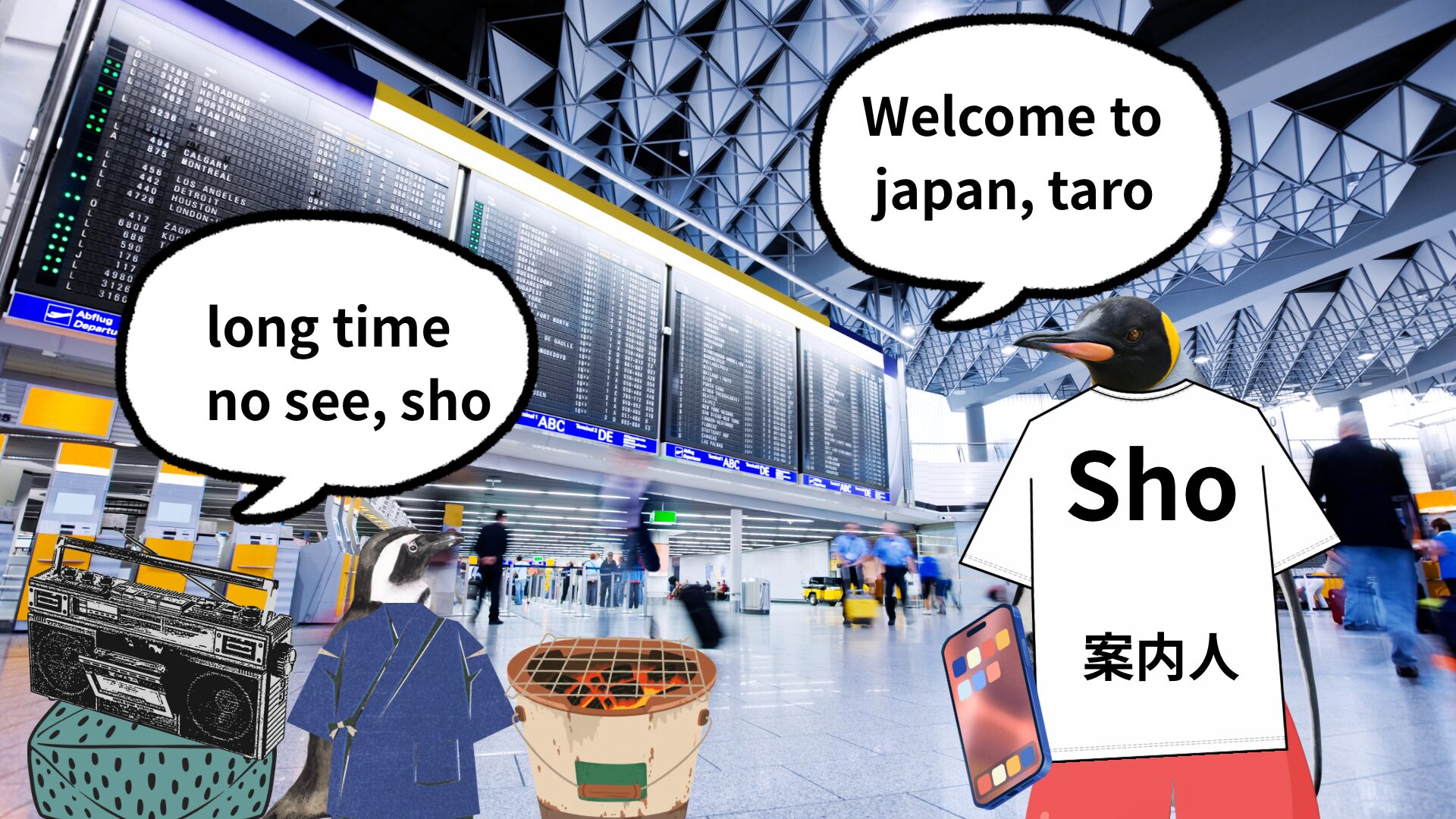
Taro had traveled all the way from Malaysia to Japan with an ambitious plan.
He wanted to introduce authentic Malaysian nasi lemak to Japanese people.
He had packed his vintage radio, a traditional cloth bundle, his father’s old-fashioned long underwear, and, most importantly, a charcoal stove.
There was only one problem.
He had never checked how to start a food business in Japan.
And his Japanese friend Sho was about to find out.
1. Taro’s Secret Business Plan
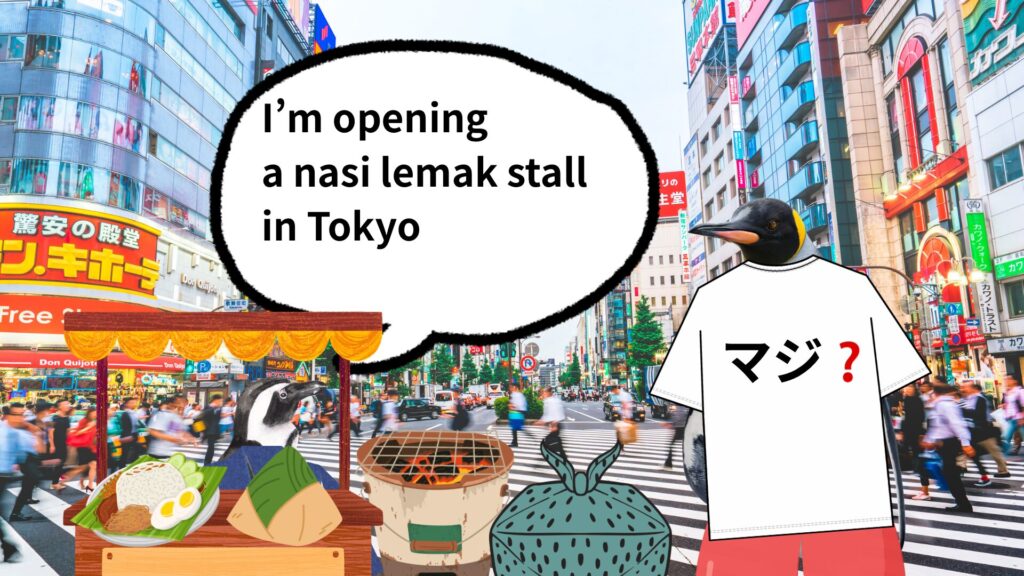
One morning, Sho discovered Taro standing beside an enormous pile of luggage.
Sho: “Taro! Why did you bring all this stuff?”
Taro: “I’m opening a Malaysian restaurant!”
Sho: “A restaurant? Where?”
Taro proudly pointed toward the sidewalk.
Taro: “Right there! A nasi lemak stall!”
Sho stared at the charcoal stove.
Sho: “You brought that all the way from Malaysia?”
Taro: “Of course! I’m fully prepared!”
Sho: “Have you checked the permits?”
Taro: “Permits? I’ve already bought the charcoal!”
Sho nearly dropped his coffee.
Sho: “YOU CAN’T JUST OPEN A FOOD STALL ON THE SIDEWALK!”
Taro looked genuinely confused.
Taro: “But I’ve brought everything!”
Unfortunately, Taro had confused bringing the equipment with being ready to run a legal business.
2. Malaysia’s Street Food Culture
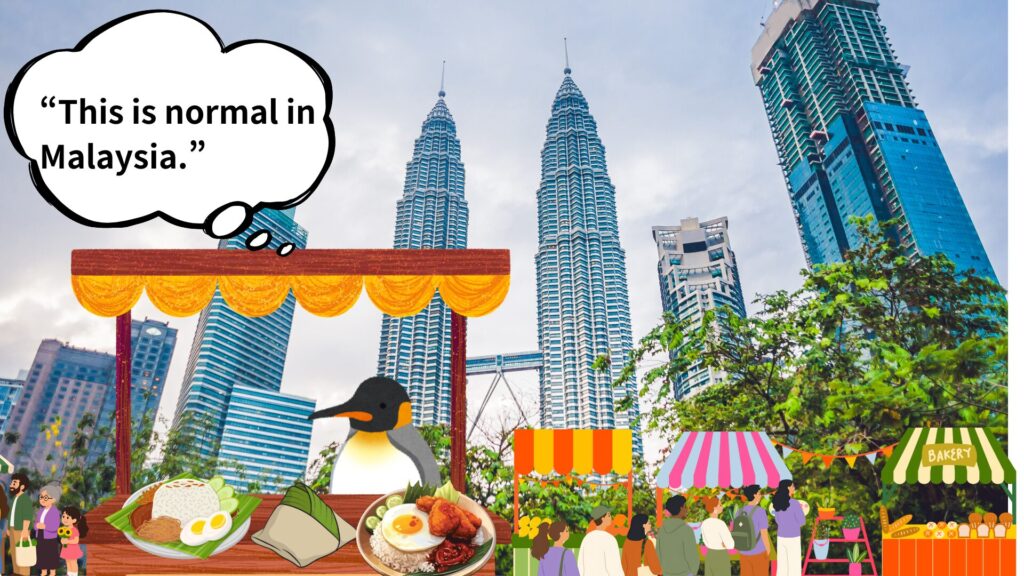
In Malaysia, food stalls and hawker centres are an important part of everyday life.
Markets and small restaurants offer a wonderful variety of meals, often at affordable prices.
Nasi lemak is one of the country’s most recognizable dishes.
It typically includes fragrant coconut rice, cucumber, peanuts, anchovies, egg, and sambal.
For Taro, sharing nasi lemak was a way of introducing his home culture to Japan.
And I understand that feeling.
I have lived in Malaysia and traveled extensively around Southeast Asia.
One of the things I love most about the region is its everyday food culture.
A small local restaurant, good food, and a relaxed atmosphere can be far more enjoyable than an expensive dining room.
However, there is an important point.
Malaysia’s vibrant street food culture does not mean that anyone can legally sell food anywhere.
Food businesses may require licences and must follow local regulations.
But Taro hadn’t researched the differences.
He had simply assumed that opening a stall in Japan would be just as familiar as the ones he knew back home.
3. Why Does Starting a Business in Japan Feel So Complicated?
Sho decided to explain the basics.
Sho: “Taro, you need to check the food business requirements first.”
Taro: “But my stove is clean!”
Sho: “That’s not enough. There are hygiene and facility standards.”
Taro: “I polished it yesterday!”
Sho: “And you can’t use a public sidewalk without the necessary permission.”
Taro: “But I only want to sell breakfast!”
Sho: “The rules still apply!”
In Japan, starting a food business may involve obtaining a licence or submitting a notification, meeting food hygiene standards, and finding a suitable location.
Depending on the business, additional permissions may be required.
For example, permission to operate a food business does not automatically authorize someone to sell food on a public road.
These regulations serve important purposes.
They help protect consumers, maintain hygiene, and ensure public safety.
But they also create practical challenges.
A large company may have staff to handle applications and paperwork.
A small entrepreneur often has to manage everything alone.
And for someone who simply wants to test a small business idea, the process can feel overwhelming.
Could some procedures be made simpler without compromising safety?
This is a question worth considering.
Japan has many strengths in organization, hygiene, and service quality.
But my experiences in Southeast Asia have also made me appreciate the visibility and variety of small independent businesses.
Different countries have different regulations, and none is entirely free of administrative requirements.
Still, I believe that protecting consumers and encouraging entrepreneurship should not have to be opposing goals.
4. Taro’s Business Empire Expands
A few days later, Sho found Taro sitting beside his luggage.
His charcoal stove was still there.
So was the vintage radio.
Sho: “Taro, have you given up on your nasi lemak business?”
Taro: “Absolutely not!”
Sho: “Good. Have you started researching the requirements?”
Taro: “Yes! I’ve made a new business plan!”
Sho smiled.
Sho: “Excellent! What’s your plan?”
Taro: “I’m opening TWO stalls!”
Sho froze.
Sho: “TWO?!”
Taro: “One for nasi lemak and one for charcoal stoves!”
Sho: “YOU HAVEN’T EVEN OPENED THE FIRST ONE!”
Taro proudly switched on his vintage radio.
His business empire was expanding.
At least in his imagination.
A Final Thought
It is easy to laugh at Taro.
But his dream is not ridiculous.
He wants to introduce something he loves from his home country to another culture.
The challenge is learning how to turn that idea into a workable business.
Sho could simply tell him to abandon the idea.
Instead, he encourages Taro to understand the requirements and discover what he needs to learn.
Education is not simply about telling people what they cannot do. It is about helping them discover how to achieve their goals.
Starting a business requires knowledge, preparation, and responsibility.
But every business begins with something much simpler.
An idea.
And Taro?
He still believes his charcoal stove will make him an international business legend.
Some entrepreneurs dream big. Taro brings the stove.
Discover Another Side of Japan
Japan is famous for convenience, technology, and outstanding service.
But why can everyday activities and simple procedures sometimes feel surprisingly complicated?
Explore more observations about Japanese systems and everyday life in my English-language Kindle book:
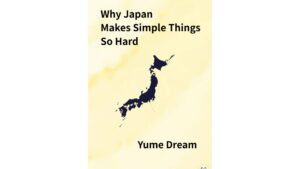
Why Japan Makes Simple Things So Hard
By Yume
Discover a different perspective on Japan, beyond the usual travel-guide experience.
Interested? Explore the book on Amazon Kindle.
Note: Sho and Taro are fictional characters. Business regulations differ by location and may change. Anyone planning to operate a real food business should confirm the current requirements with the appropriate authorities.